We carry out a range of furniture repair and restoration work from our Wigston workshop. Below you'll find detailed descriptions of each service — what it involves, when it's appropriate, and how to care for the furniture afterwards.
A sofa is typically the most-used piece of furniture in any home, and the wear it accumulates over years of daily use is entirely natural. Most sofa problems — even those that look serious — are repairable if they're addressed before the damage becomes extensive.
The most common issues we see are sagging seat cushions caused by compressed or broken foam, weakened springs or webbing beneath the seat, frame joints that have worked loose, and upholstery fabric that has torn, thinned, or become heavily stained. Each of these has a practical solution.
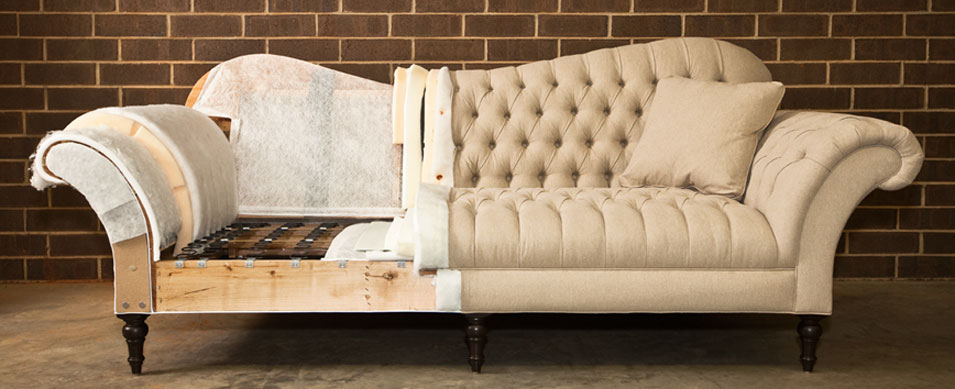
We begin by removing the upholstery to expose the frame and suspension system. This allows us to identify every problem area rather than working blind. Frame repairs are carried out using traditional joinery methods — regluing mortise and tenon joints, adding corner blocks where needed, and replacing any broken timber components.
Suspension issues are resolved by replacing individual springs, re-tying spring systems, or installing new webbing where the existing support has deteriorated past the point of tension. Cushion interiors are replaced with high-density foam cut to the correct specification. The upholstery is then re-fitted or replaced, depending on its condition.
Rotate seat cushions every few weeks to distribute wear. Avoid sitting on the same spot repeatedly. Keep upholstery away from direct sunlight and clean spills promptly by blotting (never rubbing). A light vacuum once a week helps prevent dust and debris from working into the fabric fibres.
Chairs — especially dining chairs — are subjected to repeated stress in ways that other furniture isn't. Being sat on, shifted, tilted back, and sometimes used as step ladders puts constant pressure on their joints and frame elements. Over time, this causes joints to loosen, legs to crack, and back rails to weaken.
A chair that wobbles or feels unsafe is not just uncomfortable — it's a safety issue. But it's also one of the most straightforward repairs we carry out, and the result is almost always a chair that feels as solid as when it was new.
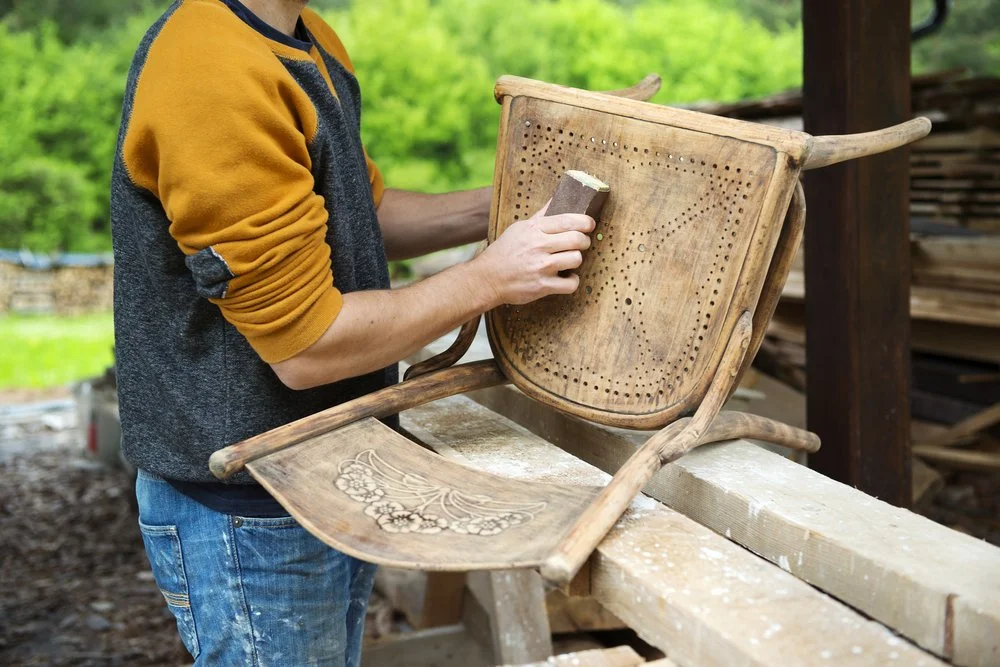
For loose joints, we carefully disassemble the affected area — sometimes the entire chair — clean out old adhesive from the joint surfaces, and reassemble using appropriate wood glue under controlled clamping pressure. Where original dowels or tenons have deteriorated, we replace them. Where there's significant structural damage to a leg or rail, we either repair the component or replace it with a close match.
We also carry out seat repairs — including re-springing, re-webbing, and re-padding — as part of a chair restoration. Once structural work is complete, any upholstery work can be carried out as part of the same job.
Avoid dragging chairs across hard floors by the back or arms — lift them from the seat. Check joints periodically and address any looseness early. Avoid exposing wooden joints to extreme changes in humidity.
Upholstery work covers a broad spectrum — from replacing a single worn seat pad to a complete strip-and-recover of a three-piece suite. It's one of the most visually transformative repairs you can make to a piece of furniture, and it allows you to change the look of a piece entirely if you wish.
We work with fabric upholstery, synthetic suede, and leather. We carry sample ranges for customers who'd like to choose a new covering, and we can also source specific fabrics on request where an existing style needs to be matched or continued.
Upholstery work begins with stripping the existing covering carefully, noting how the original was constructed so the new covering follows the same logic. We assess the padding layers underneath — replacing foam, fibre, or traditional horsehair as appropriate — before cutting and fitting the new fabric with hand-stitched or stapled edges as the piece requires.
Finishing details matter significantly in upholstery. Piped edges, button-tucking, tacking margins, and trimming are all handled with care. A well-upholstered piece should look seamless and precise.
For fabric upholstery, vacuum regularly and deal with spills immediately. For leather, apply a leather conditioner twice a year and keep away from direct sunlight and radiators. Avoid harsh cleaning products on any upholstery.
Surface damage to wooden furniture — scratches, dents, water marks, heat rings, and damaged veneer — can make a beautiful piece look worn and neglected. The good news is that most of these issues are repairable, and the results of a careful surface restoration are often remarkable.
We work on solid wood pieces as well as veneered furniture. Veneer repairs require particular care, as matching grain direction and species is critical to achieving an invisible result. We maintain a stock of common veneer types and can source others as required.
Surface repair begins with identifying the type and depth of damage. Shallow scratches can sometimes be addressed with grain filler and careful stain matching. Deeper damage may require filling, sanding, and refinishing. Water marks and heat rings in a lacquered finish usually involve careful local stripping and re-application.
For veneered pieces with lifting or damaged sections, we carefully remove the affected veneer, prepare the substrate, and lay new veneer matched as closely as possible to the original. The entire surface is then refinished to a consistent sheen level.
Always use coasters, mats, and tablecloths to protect surfaces. Wipe up liquid immediately. Avoid cleaning wood surfaces with water-based cleaners unless specifically recommended. Use appropriate furniture wax or polish — ask us what's suitable for the specific finish on your piece.
The frame is the foundation of any upholstered piece of furniture. When a sofa or chair frame weakens — through joint failure, wood deterioration, or structural damage — no amount of new fabric or cushioning will compensate. Frame problems usually get worse over time, so addressing them early is important.
We reinforce and rebuild frames as a standalone service or as part of a broader restoration. The work is carried out inside the piece, so it doesn't affect the outward appearance.
The most frequent problems we encounter are: joint failure at corners and leg connections, cracked or split timber rails (particularly the front rail, which takes significant impact load), and central support failure on wider sofas. In some cases, a frame has been poorly constructed from the outset and needs fundamental reinforcement.
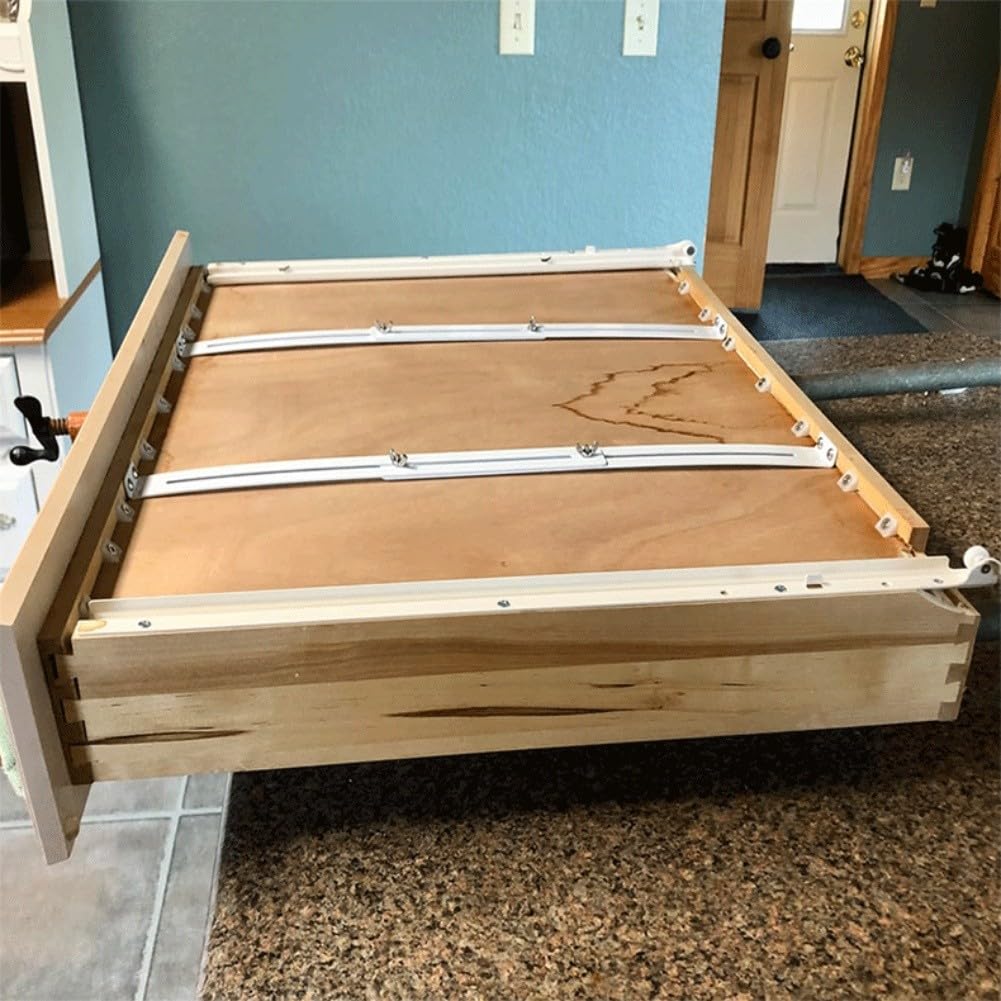
Depending on the issue, we'll reglue and clamp loose joints, install hardwood corner blocks to reinforce weak corners, replace cracked or split rails with appropriate timber, or add central support where a frame is spanning too great a width without adequate bracing. The goal is always a frame that will outlast the upholstery many times over.
Distribute seating weight evenly. Avoid jumping on sofas or sitting consistently on one end. If you notice any movement or instability returning, don't ignore it — a small repair done early is always preferable to a large one done later.
Antique furniture requires a more considered approach than modern pieces. The materials, construction methods, and finish types found in older furniture are often different from contemporary equivalents, and using the wrong products or techniques can cause irreversible damage.
We take time to understand each piece before starting work. For pieces with known provenance or significant monetary value, we're happy to discuss the scope of work carefully and proceed conservatively — sometimes, the right answer is to stabilise a piece rather than restore it fully.
We aim to use period-appropriate methods wherever practical. For pieces finished in shellac or French polish, we use traditional materials rather than modern lacquers. For structural repairs on pre-20th century furniture, we favour hide glue over modern adhesives where conditions allow, as it is reversible and appropriate to the period.
Patina — the natural accumulation of age, wear, and polish — is respected and preserved wherever possible. Stripping an antique piece back to bare wood and refinishing it uniformly typically reduces both its character and its value. We work to consolidate rather than obliterate.
Antique pieces should be kept away from central heating vents and radiators. Use appropriate wax polishes rather than spray products with silicone. Handle with care and avoid placing heavy objects on delicate surfaces. For valuable pieces, periodic inspection by a professional is worthwhile.
Get in touch with a description of your piece and we'll help you work out what's needed. No obligation, no pressure.